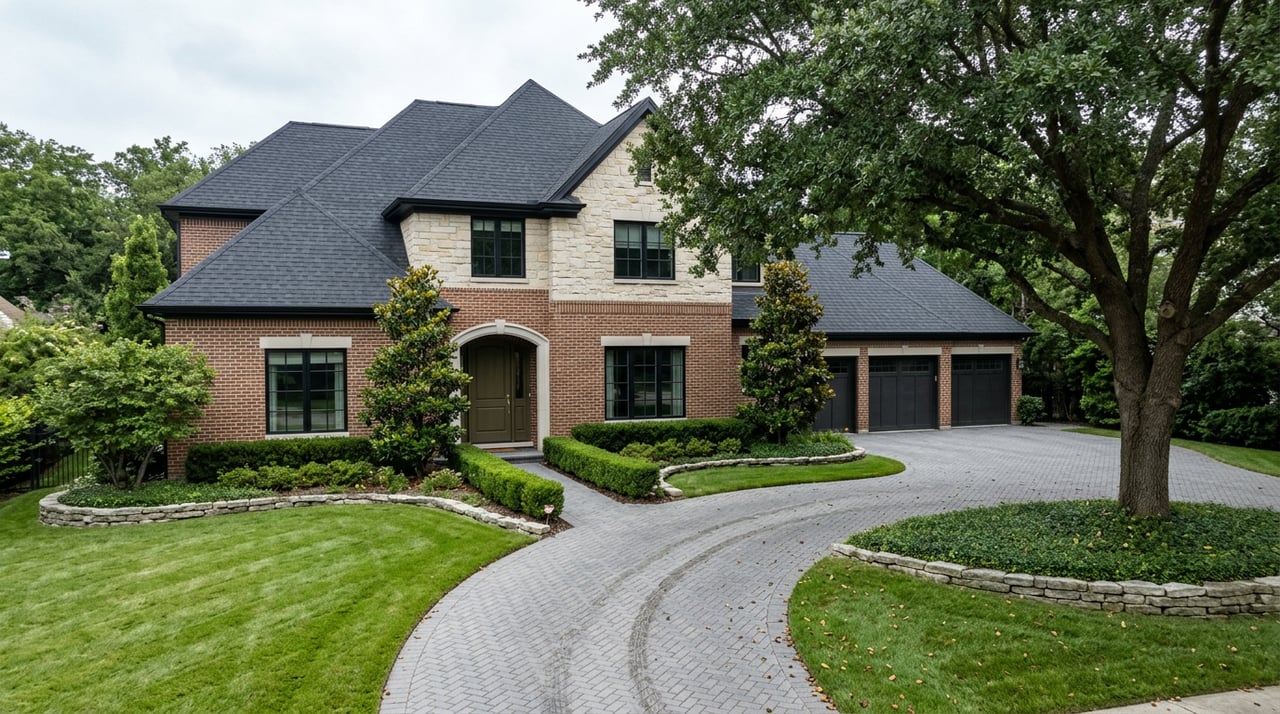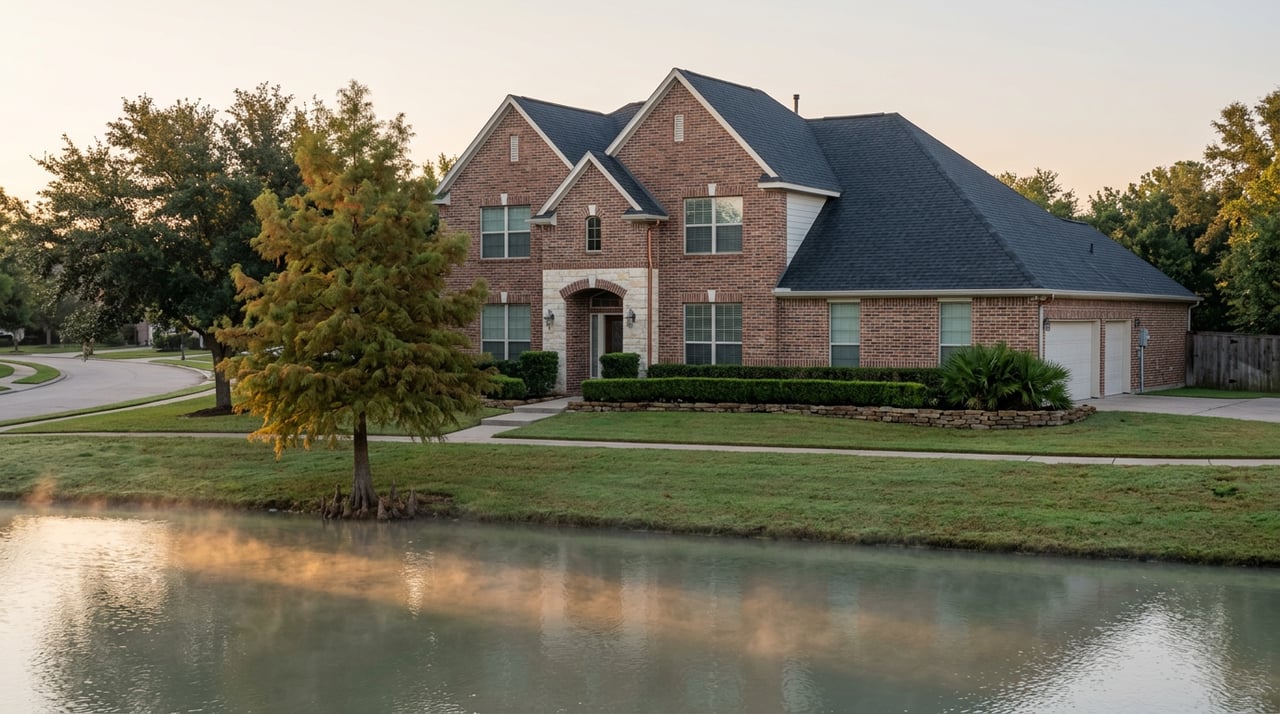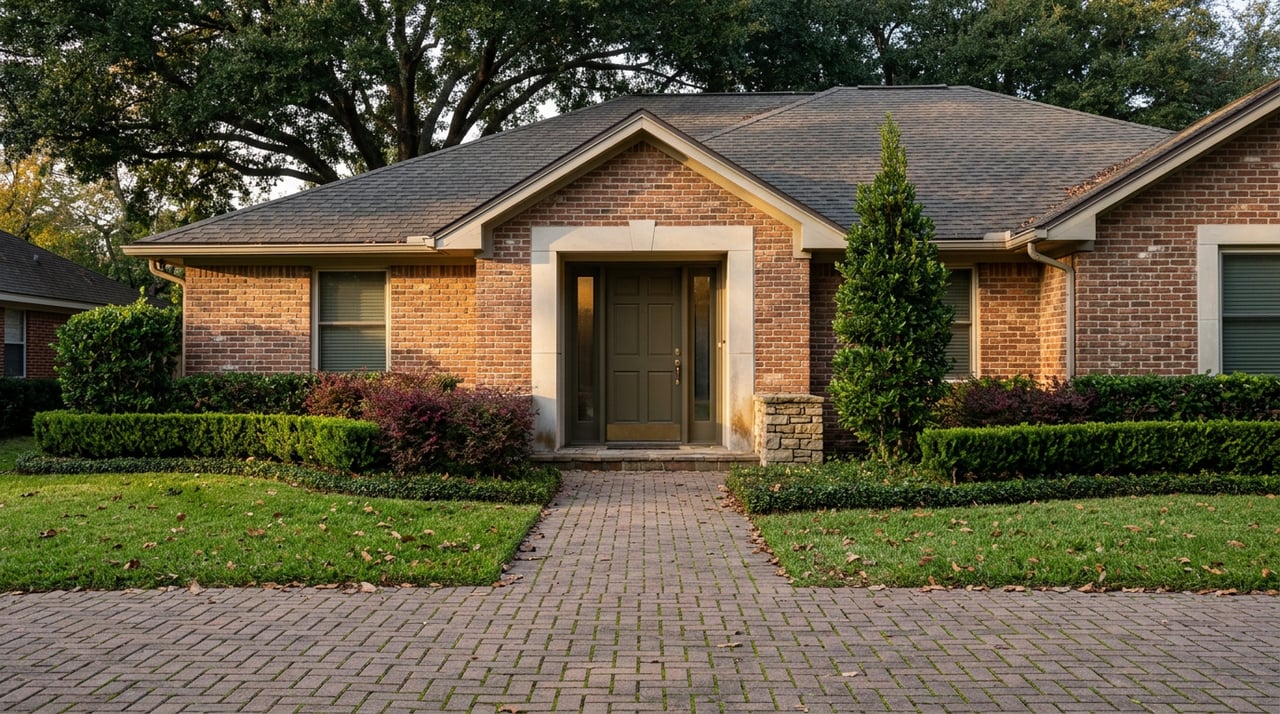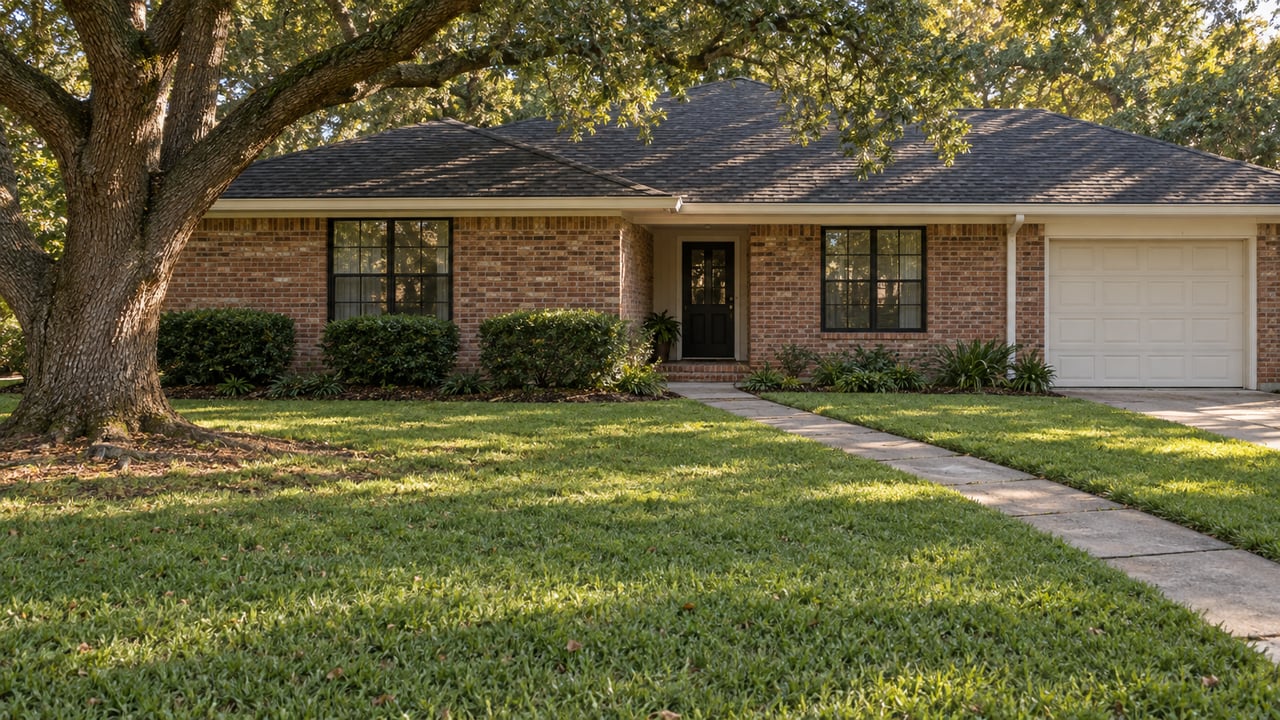
"It will start in the older villages first." That's how Walter Lisiewski, then chairman of The Woodlands Township's Development Standards Committee, described the wave of teardowns moving through Grogan's Mill in a 2020 interview with the Houston Chronicle. Six years on, the wave hasn't slowed. It has just gotten harder to see in a single number.
Grogan's Mill was the first village built in The Woodlands, with development starting in the fall of 1972. It now holds roughly 5,100 homes across 22 neighborhoods, and a growing share of those homes are approaching or have passed the half-century mark. That age is exactly why the village's pricing looks strange if you only glance at the headline figure. As of September 2026, the median home price in Grogan's Mill sits at $420,000, but the average sale price for the same window is $585,964. A median that low next to an average that high is not a rounding quirk. It is two different products being sold under one label.
Two Sales, One Village Center
Redfin's data for the three months ending May 2026 put the median sale price at roughly $430,000, up 4.8% year over year. Zillow's May 2026 figures placed typical home value near $462,000 while noting April's median sale price had climbed past $600,000. The sources don't agree on the exact numbers, but they agree on the shape: a cluster of sales near the low $400,000s, and a second cluster pulling the average well above it.
That second cluster is not a coincidence of a few expensive listings. It's structural. Grogan's Mill's original 1970s and 1980s homes, many on quarter-acre lots, still trade close to their vintage. Sit next to them are lots in Grogan's Point, Doe Run, Fern Lake, Royal Fern, and Wilding Estates, where original parcels ran from a half acre up to a full acre, some backing onto the Tournament Players Course. Those larger, older lots are the ones drawing buyers who plan to clear the existing structure and build new. Active listings this September ranged from $219,000 to $3,295,000, and that spread is the median-average gap made visible one property at a time.
The Lot Is Doing the Work
A local market analysis published in August 2026 by Woodlands Online framed the shift plainly: as available land inside the established villages runs out, the value in an aging Grogan's Mill property increasingly sits in the ground it occupies rather than the floor plan on top of it. The same piece pointed to villagewide numbers for context. Across The Woodlands, the median single-family sale price in Q2 2026 was approximately $675,000 on 512 closed sales, up from $590,000 in Q2 2022. Grogan's Mill's median trades well below that townwide figure, which is the part a straight comparison misses. A buyer scanning median prices across villages would read Grogan's Mill as the discount option. A buyer who understands what's actually changing hands there reads it as underpriced relative to the land beneath it, at least until the rebuild math catches up.
That math has been building for over a decade. Local developers and real estate professionals were already describing Grogan's Mill's shift from remodel-first to teardown-first by 2013. What's different now is scale. Wooded, walkable, half-acre lots two minutes from Town Center are not something a builder can manufacture in a newer village. Grogan's Mill has them because it was platted before anyone was optimizing for smaller footprints, and that scarcity is what's compressing into the average sale price without ever showing up in the median.
The Covenant Catch
Here's where the transaction gets more complicated than the pricing story suggests. The same aging lots that make Grogan's Mill attractive for a rebuild sit inside a covenant structure that predates the current appetite for larger homes. The Woodlands Township's Development Standards Committee enforces design and size standards on new construction within each village, and Grogan's Mill was where that enforcement first became a visible friction point. New owners were routinely seeking larger square footage than the original 1970s covenants anticipated, and the committee tightened its review specifically in response, with Lisiewski noting the trend had reached Panther Creek as well by the time of that reporting.
For a buyer evaluating a teardown lot in Grogan's Mill, this is the step that a portal search doesn't surface. A half-acre lot in Wilding Estates or Grogan's Point doesn't come with an automatic green light for whatever square footage a builder proposes. It comes with a covenant, an association (the Grogan's Mill Village Association, operating under Woodlands Township governance), and a design standards review that varies by neighborhood. Skipping that check before writing an offer is how a land-value purchase turns into a delayed permit or a redesign.
What This Changes About Comparing Villages
| Original-condition homes | Teardown / rebuild lots | |
|---|---|---|
| Typical lot size | Quarter acre, standard village lots | Half acre to full acre (Grogan's Point, Wilding Estates, Doe Run, Fern Lake, Royal Fern) |
| What sets the price | Structure condition, updates | Land, proximity to Town Center, buildable footprint under covenant |
| Buyer's real diligence step | Standard inspection | DSC design review and GMVA covenant check before finalizing plans |
A buyer comparing Grogan's Mill to a newer village on median price alone is comparing a blended average to a single-product number. Newer villages don't have this split because they don't have a fifty-year-old housing stock sitting on land that predates current buildable standards. Grogan's Mill's median looks soft next to villages like Alden Bridge or Creekside Park until you account for the fact that a meaningful share of its sales aren't really home sales. They're land purchases with a demolition line item attached.
FAQ
Does every older home in Grogan's Mill qualify for a teardown rebuild? Not automatically. Lot size, existing covenants, and the specific neighborhood association's design standards determine what a new structure can look like. Confirming the applicable covenant before assuming rebuild rights is a step worth taking early, not after an offer is accepted.
Why does Grogan's Mill's median look lower than other Woodlands villages? Because the median mixes original-condition 1970s and 1980s homes, which still trade near their vintage price point, with a smaller number of much higher-priced teardown and new-construction sales. The average moves more than the median because that second group pulls harder on it.
Is the land value trend limited to Grogan's Mill? Reporting on Development Standards Committee enforcement noted the same rebuild pattern appearing in Panther Creek as well, suggesting other original villages with older housing stock may follow a similar path as their homes age.
Grogan's Mill rewards the buyer who asks what a listing price is actually pricing. If you're weighing an older home here against something newer across town, or trying to figure out whether a specific lot can support the rebuild you have in mind, We Sell The Woodlands can walk the covenant and comparable data with you before you write an offer, not after.